For families already stretching their food to one meal a day, preparing for the rainy season starts with having something to cook at home. On October 13, 2026, Human Development Fund (HDF) delivered food parcels to 600 families in Wajir County, Kenya. The parcels were intended to help households meet their food needs for several weeks.
HDF’s field team reported that most households in the community it visited were eating once a day. The distribution addressed that immediate shortage while helping families prepare for possible disruption to roads and markets during heavy rains.
Acting before access becomes difficult
The team planned the distribution as an anticipatory response: providing assistance ahead of an expected hazard, while families and aid teams can still move around.
For pastoralist households, heavy rain can threaten more than a journey to the market. Flooding can interrupt access to food and put livestock at risk. Delivering supplies early helps reduce the need to travel for food if routes become unsafe.
The aim was to give families time to prepare with food already in their homes. It could also ease pressure to sell animals quickly to pay for meals, helping households protect the source of their future income.
A household’s income depends on its herd
In this part of northeastern Kenya, many families depend on livestock for milk, meat and income. When pasture and water are available, herds help sustain the household. When conditions deteriorate, families have fewer options.
The field team described limited access to salaried work and little regular income outside livestock keeping. A household’s ability to buy food therefore depends heavily on the condition of its animals and the prices they bring at market.
A difficult season can reduce both income and the food available at home. That connection shaped the response: helping families meet an immediate need while they prepare to look after their animals through changing conditions.
Wajir food parcels for 600 families
HDF coordinated the October 13 distribution with local government and community members. Each parcel contained maize flour, rice, beans, cooking oil, sugar, salt and tea leaves.
The same 600 households also received 10,000 liters of water, delivered in two 5,000-liter tanks.
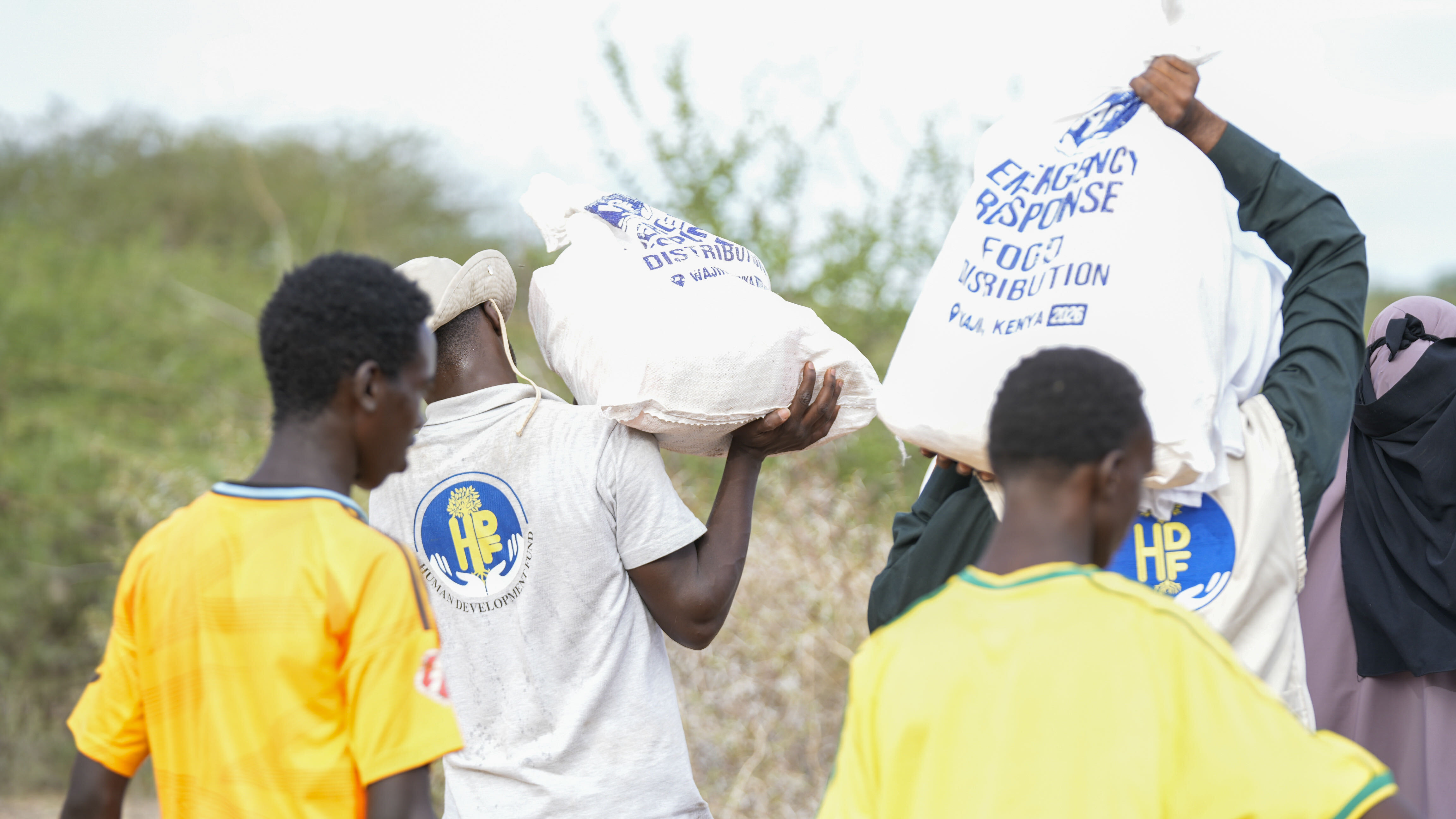
The parcels were designed to provide several weeks of assistance. How long they last will depend on each household’s size and needs, which makes follow-up an important part of the work.
For parents, having food at home can make it easier to plan meals while attending to their children and other responsibilities. It may also leave more of a household’s limited cash available for needs such as medicine or transport.
Following up with families
The distribution provides temporary relief. Families still face the longer-term pressures of limited income and an ongoing food shortage.
HDF’s monitoring and evaluation team plans to follow up as the rains set in. Staff will track how often families are eating and what remains in their food stocks. That information will help the team understand how long the parcels lasted and where further assistance may be needed.
The distribution also received coverage in The Standard, bringing wider attention to the pressures families in Wajir face.
For the 600 families served, the immediate aim was straightforward: food available at home before difficult weather could make it harder to obtain.
Support HDF’s food security programs to help families access essential food.