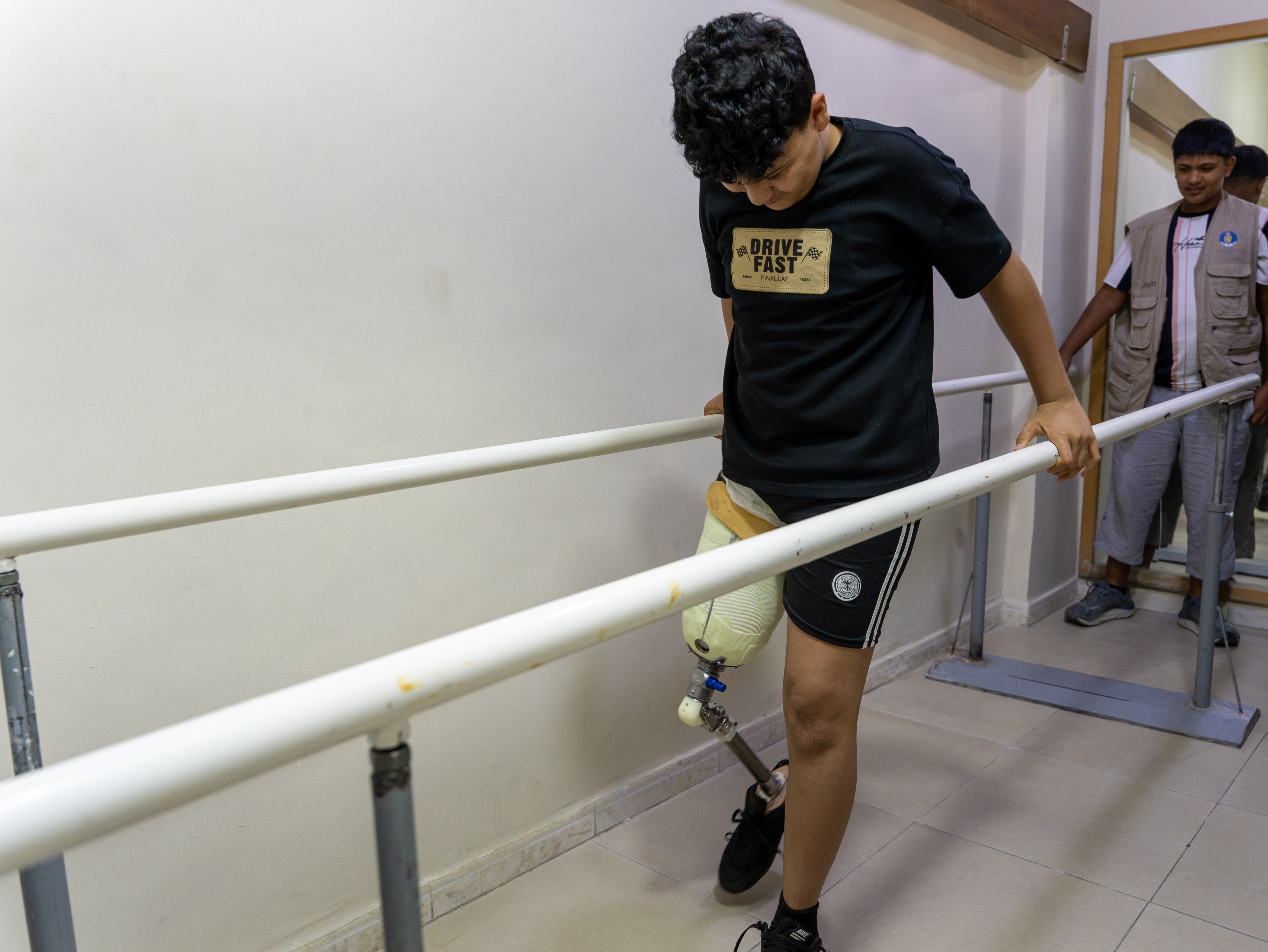
The children came for a day of play. On September 17, 2026, Human Development Fund (HDF) organized a recreational day in Jordan for children from Gaza. Eight of them did not know that their new prosthetic limbs were ready. During the activities, HDF presented them with their prostheses. One child, a 10-year-old boy who had lost both legs, received two.
That day was part of HDF’s work providing prosthetic limbs for children from Gaza receiving medical treatment in Jordan. In 2026, the program fitted 11 custom-made prostheses for 10 people: nine children aged 10 to 17 and one woman aged 37.
A prosthesis made for one person
Each prosthesis was made to the individual’s measurements and type of amputation, using German components. The fittings included three prosthetic arms and eight prostheses for legs and feet.
Four above-knee prostheses went to three children, including the boy who received two. Three below-knee prostheses went to two boys and the adult woman. A 14-year-old girl received a custom silicone foot following a partial foot amputation.
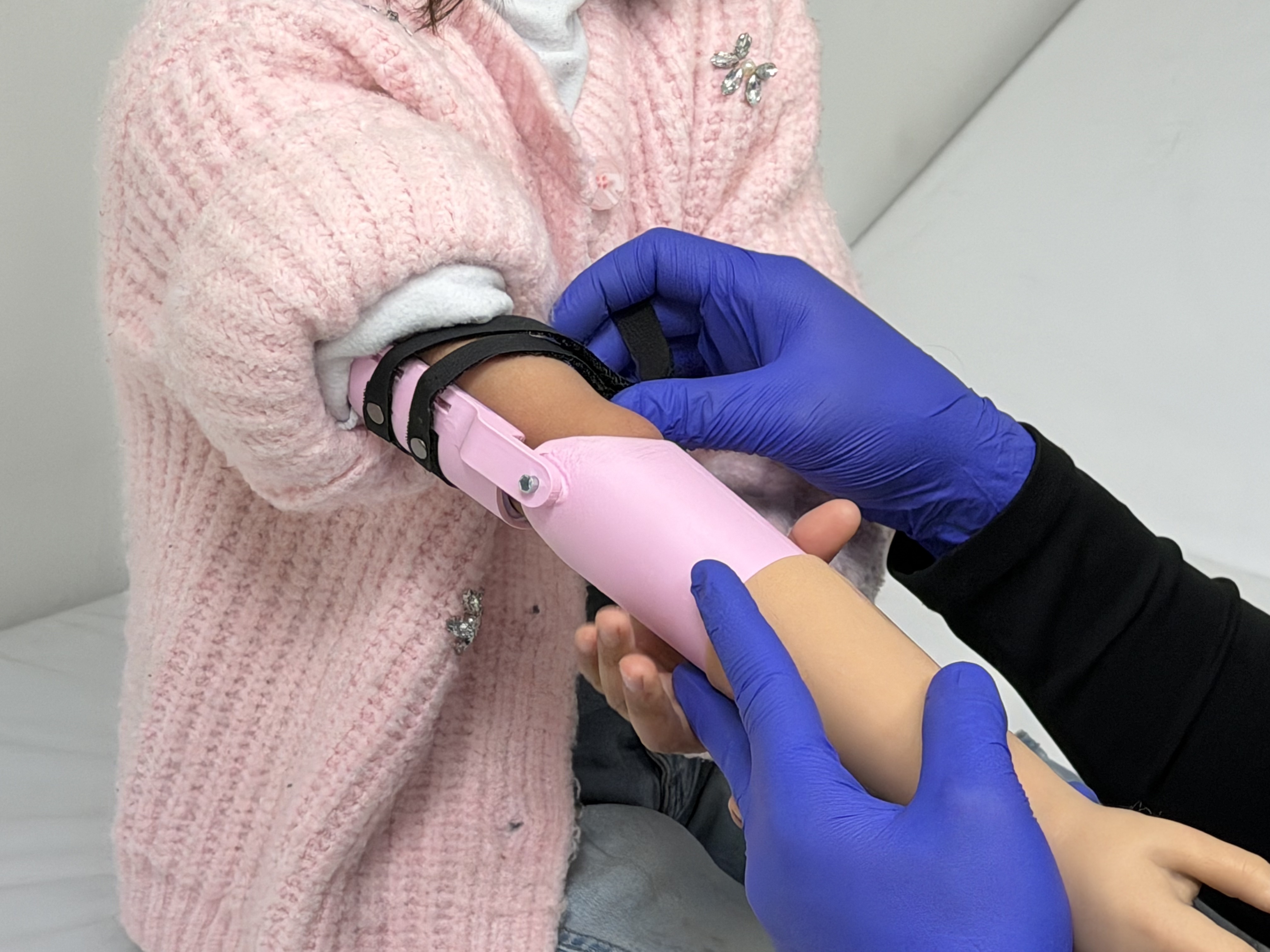
The three arm prostheses included one below-elbow arm and two above-elbow arms. The below-elbow prosthesis combined a soft socket, a lightweight carbon-fiber frame and a silicone hand, with a total weight of about 400 grams.
Fitting, practice and adjustments
The process began with reviewing cases and prioritizing those with the greatest need. Assessments and measurements came before fabrication. Trial fittings then gave the team time to check alignment and make adjustments before the final fitting.
Receiving the prosthesis was followed by learning to use it. Children with prosthetic legs practiced walking and balance. Those with prosthetic arms practiced using them for everyday tasks. The team checked comfort and fit and made further adjustments where needed.
Progress at the first follow-up
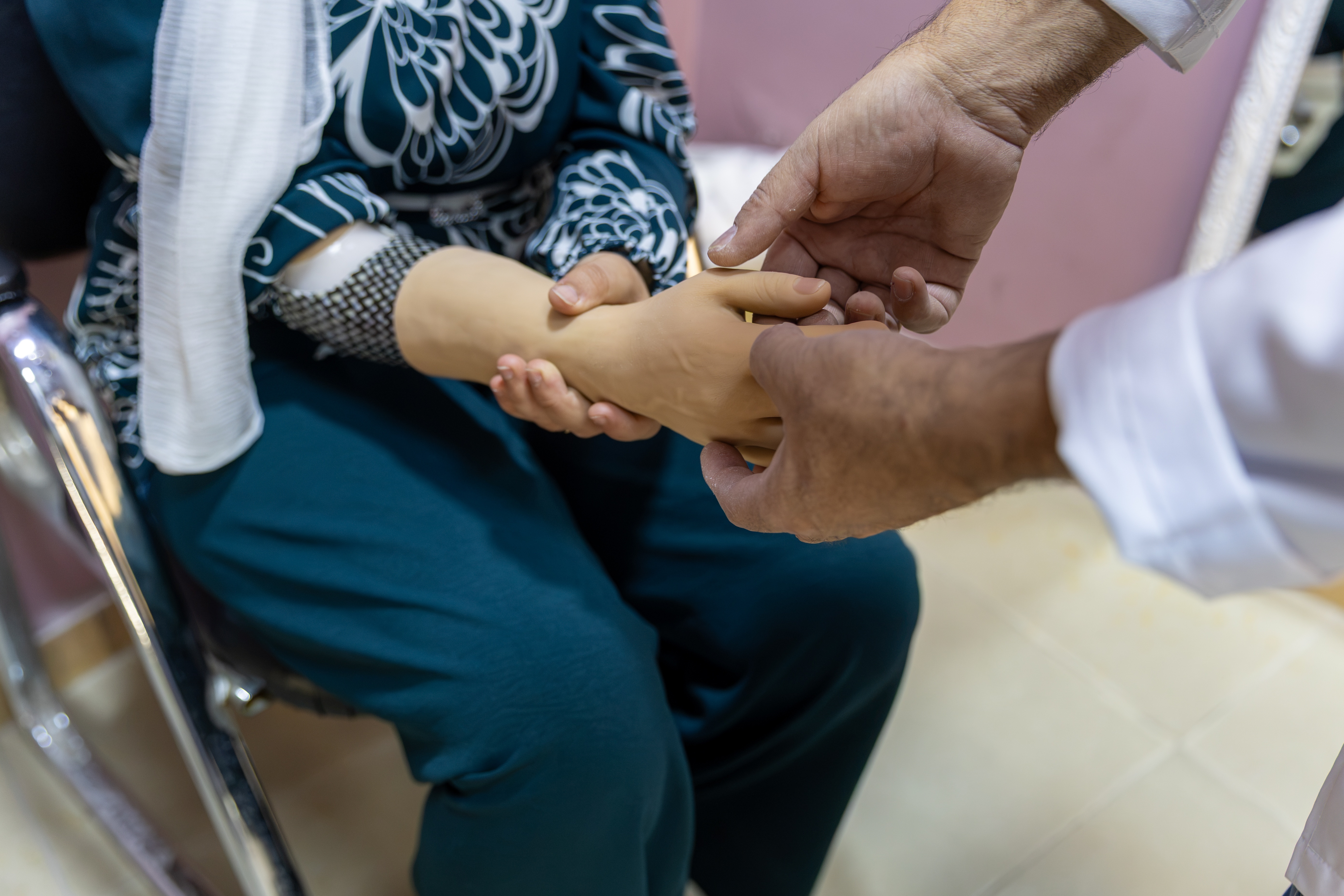
For the 37-year-old woman in the program, standing had been difficult even before she could begin practicing with a prosthesis. One leg had been amputated below the knee. Her other leg had needed several surgeries and still could not bear her weight normally. When HDF first assessed her, she could not stand or walk independently.
She received her below-knee prosthesis on August 15, 2026. At her first follow-up, she had begun standing and walking with it.
A 16-year-old girl received her below-elbow prosthetic arm on August 11. Early follow-up found that she was adapting well. Her care will need to include reassessment as she grows, so the fit continues to meet her needs.
Keeping care within reach
Follow-up remains an important and difficult part of this work. Children need checks and adjustments as they grow, and eventually may need replacement prostheses. Learning to use a limb also takes practice and support beyond the fitting appointment.
HDF follows up closely while people are in Jordan and reachable. But families do not always have working mobile numbers, and they may return to Gaza at any time. These practical barriers mean HDF cannot guarantee long-term follow-up for everyone.
The fittings mark a stage in each person’s care. The work continues through training, adjustments and the effort to stay in touch with families after they leave the clinic.
Support HDF’s medical aid programs to help people access essential care.