Most people who want to give more are not short on intention. They are short on moments. Giving often happens when an appeal reaches us, during Ramadan, or when the news makes a crisis impossible to ignore. Between those moments, the intention can sit still.
Sadaqah+ was built to close that gap.
Sadaqah+ is a round-up giving platform from Human Development Fund (HDF). Buy a $4.35 coffee, and the 65 cents needed to reach the next dollar is set aside as sadaqah, voluntary charity in Islam. These small amounts add up quietly in the background and go to HDF programs on a schedule you choose.
I led product design on Sadaqah+, from onboarding and the dashboard to the tools HDF’s team uses behind the scenes. This post walks through the decisions that shaped it and what we hope it changes for the people who use it.
What round-up giving asks of donors
A round-up product asks for something unusual. Donors give an organization ongoing access to their purchase amounts so it can calculate gifts they may rarely think about. For that to work, we had to get three things right at once:
- Quick setup. Every extra screen before connecting a bank account is another chance for someone to drop off.
- Confidence in automation. Automatic giving only works when people understand the limits around it and know they are the ones who set them.
- Giving that stays visible. If round-ups vanish into the background, they start to feel like a fee rather than an intentional act of sadaqah.
We wanted giving that feels effortless without feeling distant, and automatic without taking control away from the donor.
Onboarding: decisions first, bank connection last
Onboarding is a short, linear flow with a visible progress indicator. The order of the steps mattered as much as the steps themselves.
- Passwordless sign-in. Donors enter their email address and confirm a six-digit code, so there is no new password to create or remember.
- Giving preferences. Donors choose to round up to the nearest dollar, give a fixed amount per transaction or give a percentage of each purchase. Each option comes with a worked example. Rounding up a $2.70 purchase, for instance, gives $0.30.
- Frequency and a daily limit, together. Donors choose how often to give and set a daily maximum, with quick-select amounts from $5 to $200 or a custom figure. We put the cap in onboarding rather than in settings so the limit exists from the first day.
- A cause. Donors can pick where their gifts go or choose Let HDF Decide, which directs funds to the most urgent needs. We mark it as recommended for people who want to give without researching every program.
- The bank, last. By this point, donors have decided how much to give, how often and where. Connecting a bank account becomes the final step of a plan they made, not the first thing we ask of them.
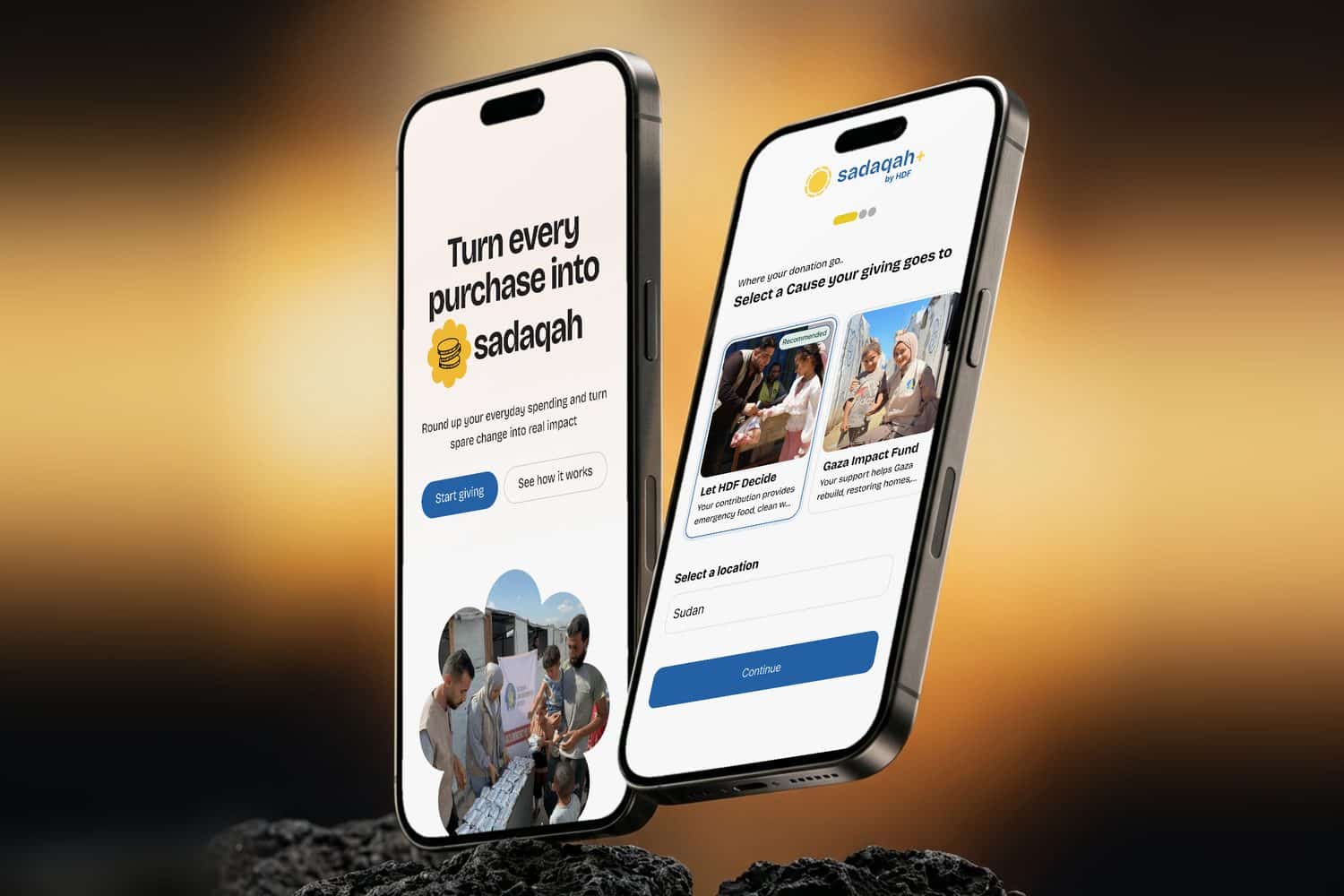
The bank connection got particular care. HDF does not see or store donors’ bank login credentials. Transaction data is used to calculate round-ups, and merchants still receive the original purchase amount. We explain this in plain language on the landing page and in the app before anyone connects an account. For a product that touches someone’s bank account, that explanation matters as much as the interface.
The dashboard: making small gifts feel real
Round-ups are small on purpose, so the dashboard has to give them meaning without exaggerating them.
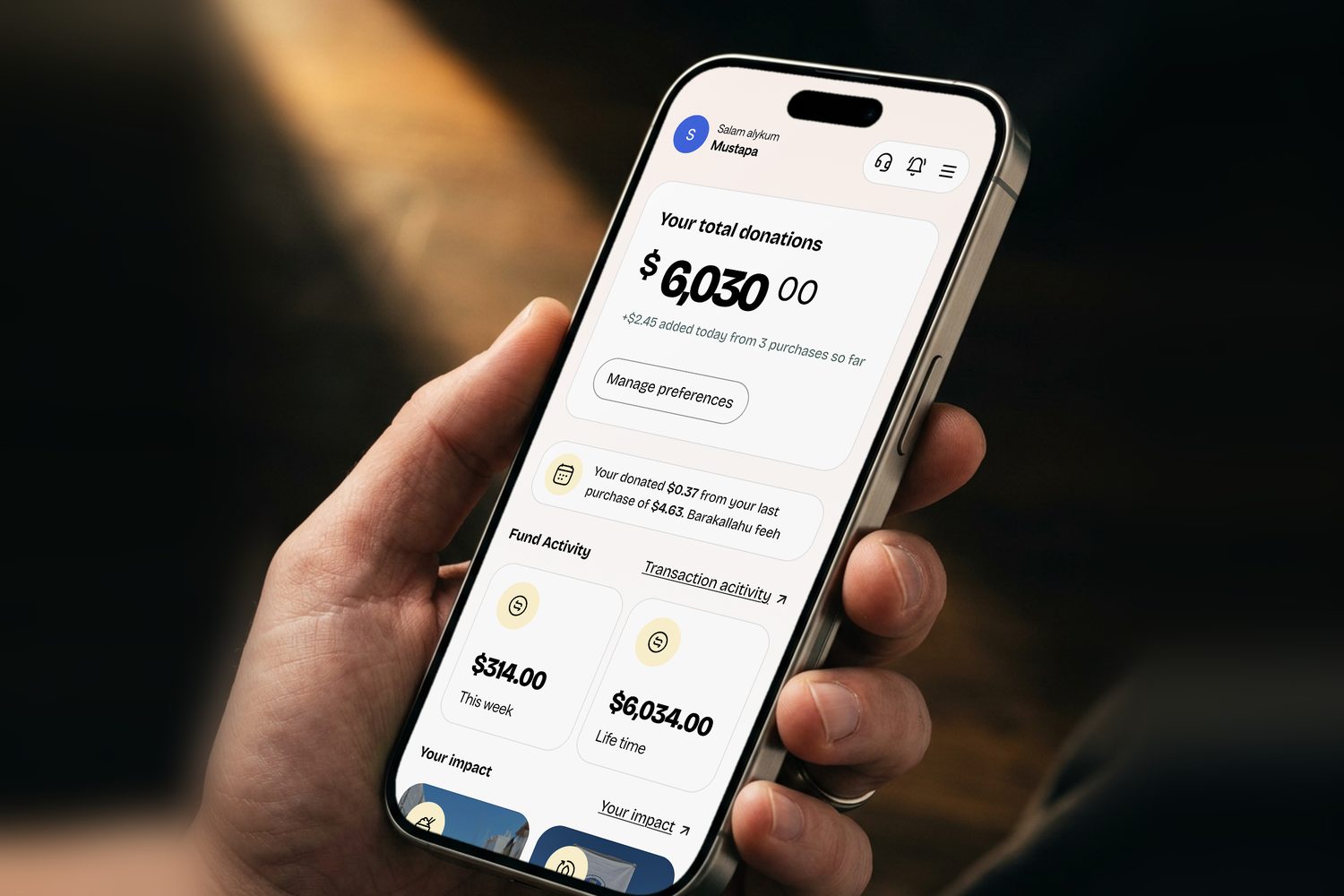
The top of the screen answers the question donors most likely have when they open the app: how much have I given?
Below that, each gift is tied back to the purchase that made it: “You donated $0.37 from your last purchase of $4.63. Barakallahu feeh.” The phrase is a common Arabic blessing. Along with the salam greeting in the header, details like this make Sadaqah+ feel made for the community it serves rather than like a generic finance app.
The rest of the dashboard covers three needs:
- Fund activity shows what a donor has given this week and over their lifetime, with a path to their full transaction history.
- Your impact uses cards to connect contributions to outcomes such as meals provided and days of clean water.
- Give more offers a route to HDF’s wider programs for donors who want to go beyond round-ups.
Notifications follow the same thinking. Donors choose which ones they receive: round-up confirmations, receipts, summary digests and milestone alerts. Small gifts should feel significant because they are clear and consistent, not because the numbers are inflated.
Control built into the product
Because Sadaqah+ runs automatically, donor control is part of the core experience rather than a settings page. Donors can pause round-ups, change their daily limit, switch causes, manage connected accounts or disconnect entirely. Receipts and transaction history are always available, for peace of mind and for tax time.
We also designed the side donors never see: the tools HDF’s team uses to manage donors, transactions, notifications and administrators. Designing both together kept them consistent. A receipt a donor downloads has to match the transaction record the team can look up and verify.
A visual language with warmth
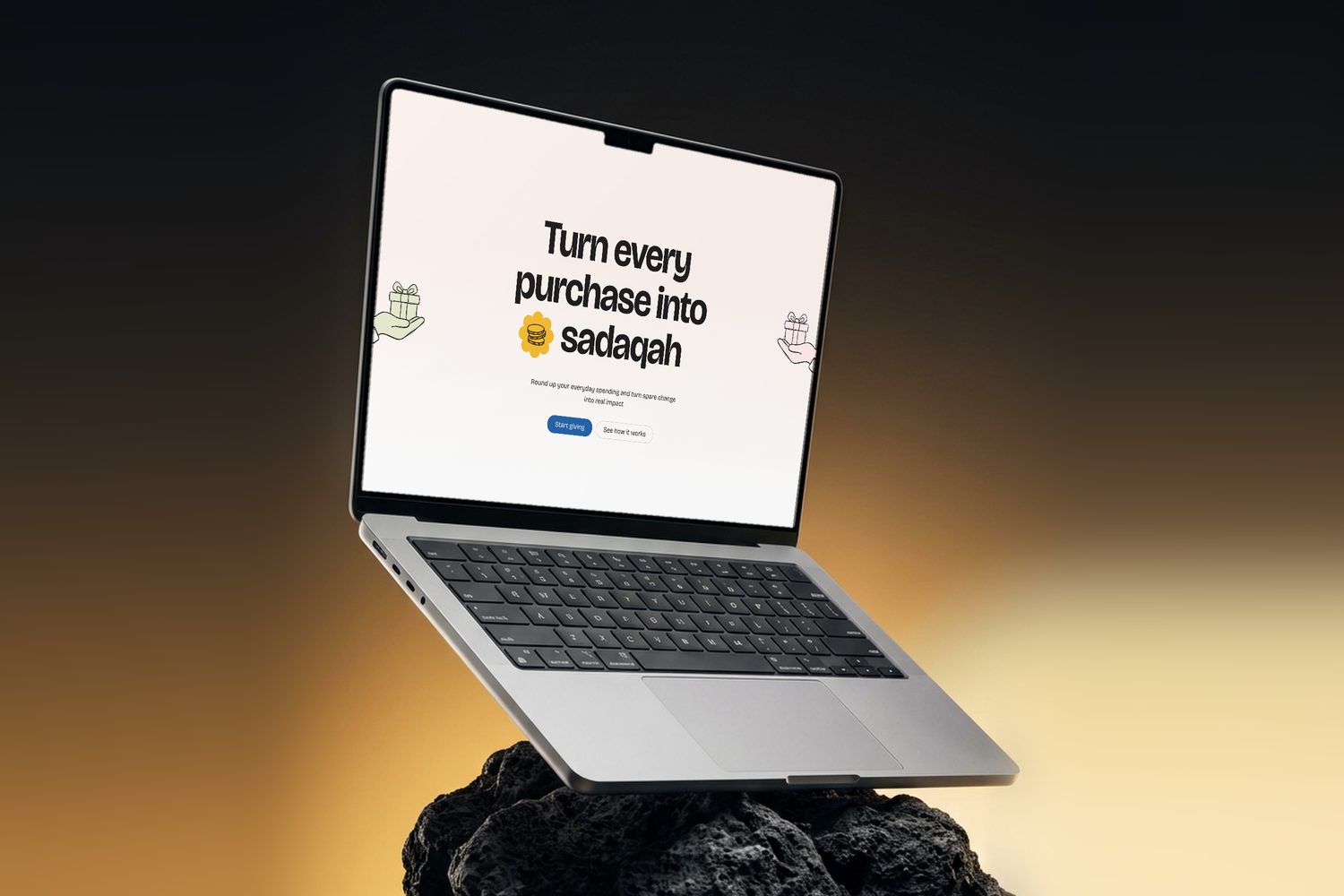
We wanted Sadaqah+ to feel connected to HDF while having a personality of its own. Headlines are set in Bricolage Grotesque, a contemporary typeface with real warmth that still keeps figures easy to read. The palette starts from HDF blue and adds sun yellow, deep red and soft cream. A sun-inspired logo mark and soft floral shapes frame photography and statistics, which balances the practical, financial side of the product.
The same language carries across the website on desktop, tablet and mobile, the app on desktop and mobile, and branded emails such as donation summaries.
What we hope it changes
The change we care about most is giving that becomes a regular practice rather than an occasional decision.
Someone who might otherwise give only during a particular appeal can now contribute a little with everyday purchases, toward causes they care about, within limits they set. Receipts and summaries keep them informed, and they can pause or change their preferences whenever they need to.
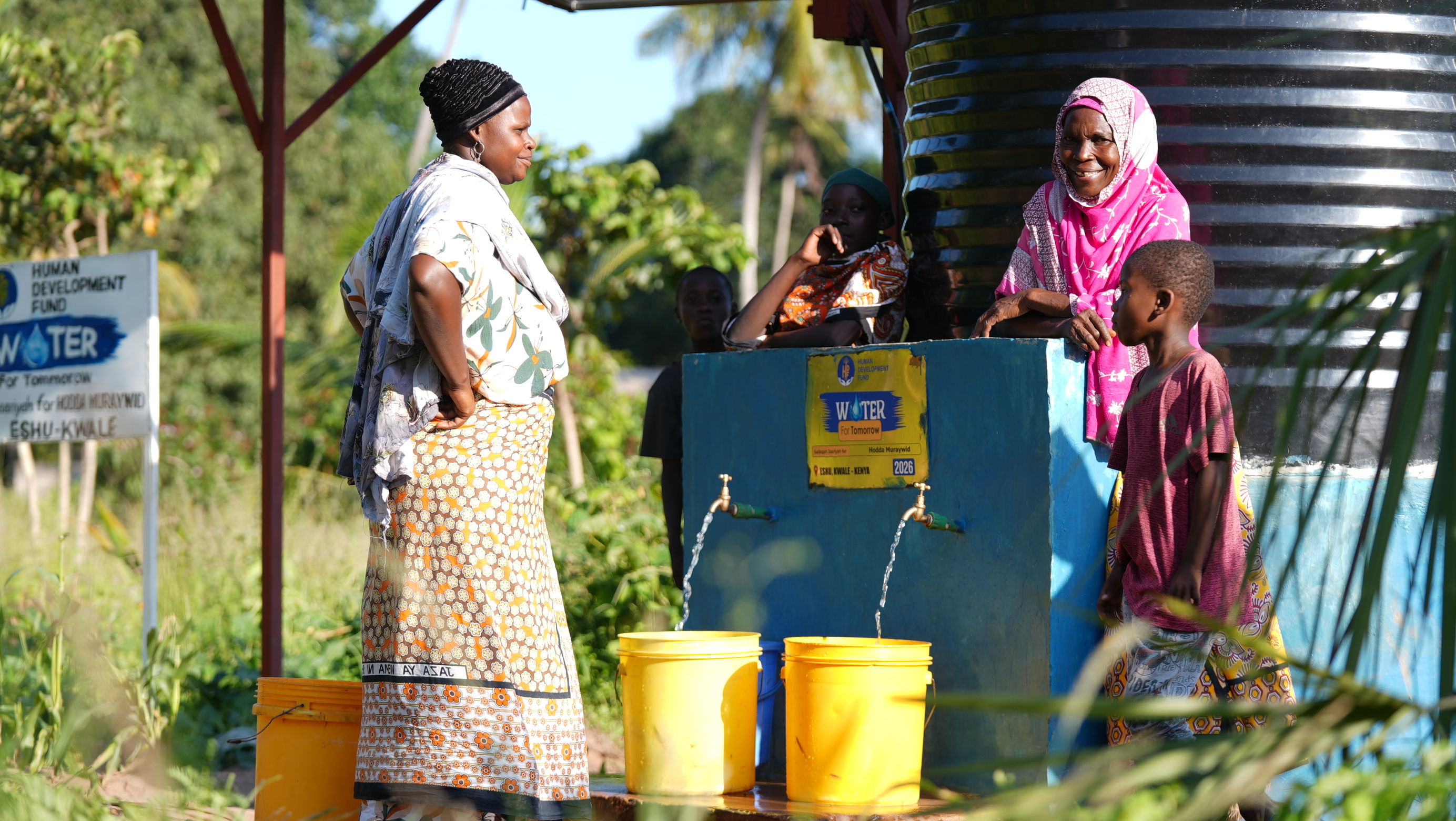
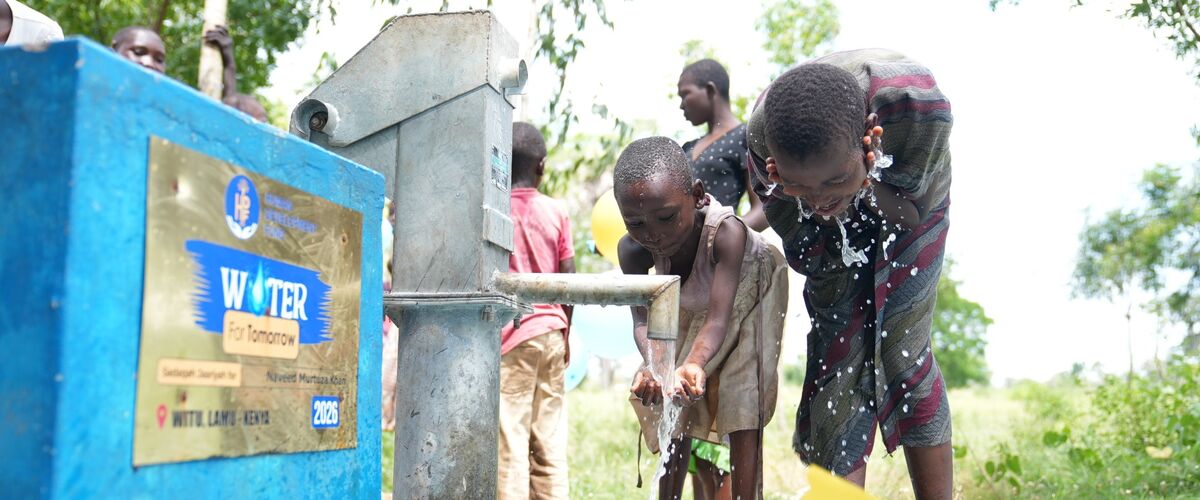
For HDF, round-ups offer steadier support that does not depend only on the next crisis or campaign. More predictable funding helps sustain work such as hot meals, clean water, orphan care, medical aid, education and emergency relief, including in Gaza and Sudan.
For us as product builders, Sadaqah+ reinforced a simple idea: technology can do more than make an existing process faster. It can make meaningful actions easier to sustain.
The best giving experience is not the one that asks people to give more often. It is the one that makes a good intention easier to keep.
Sadaqah+ is live. See how it works and set up your round-ups at sadaqahplus.org.