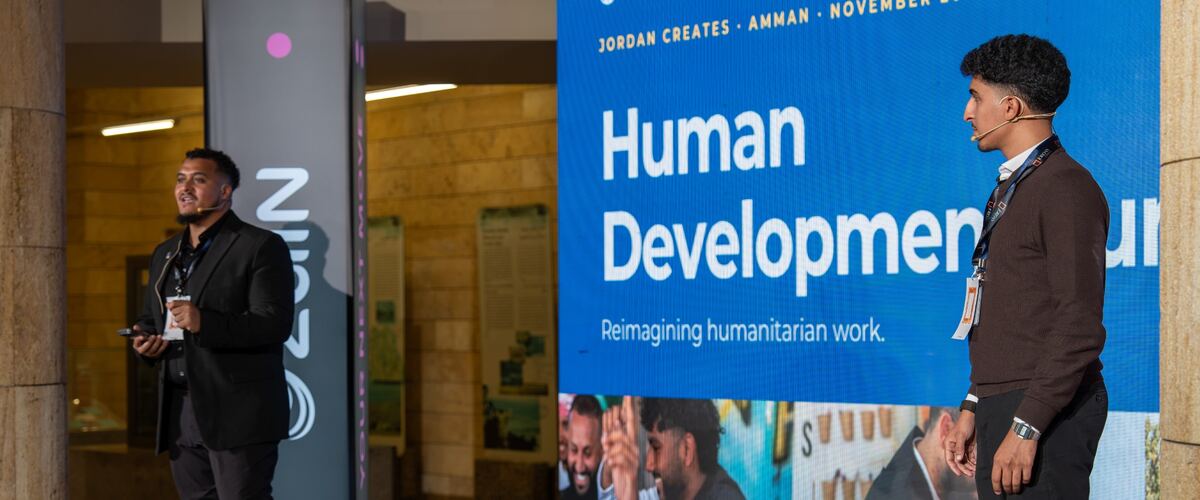
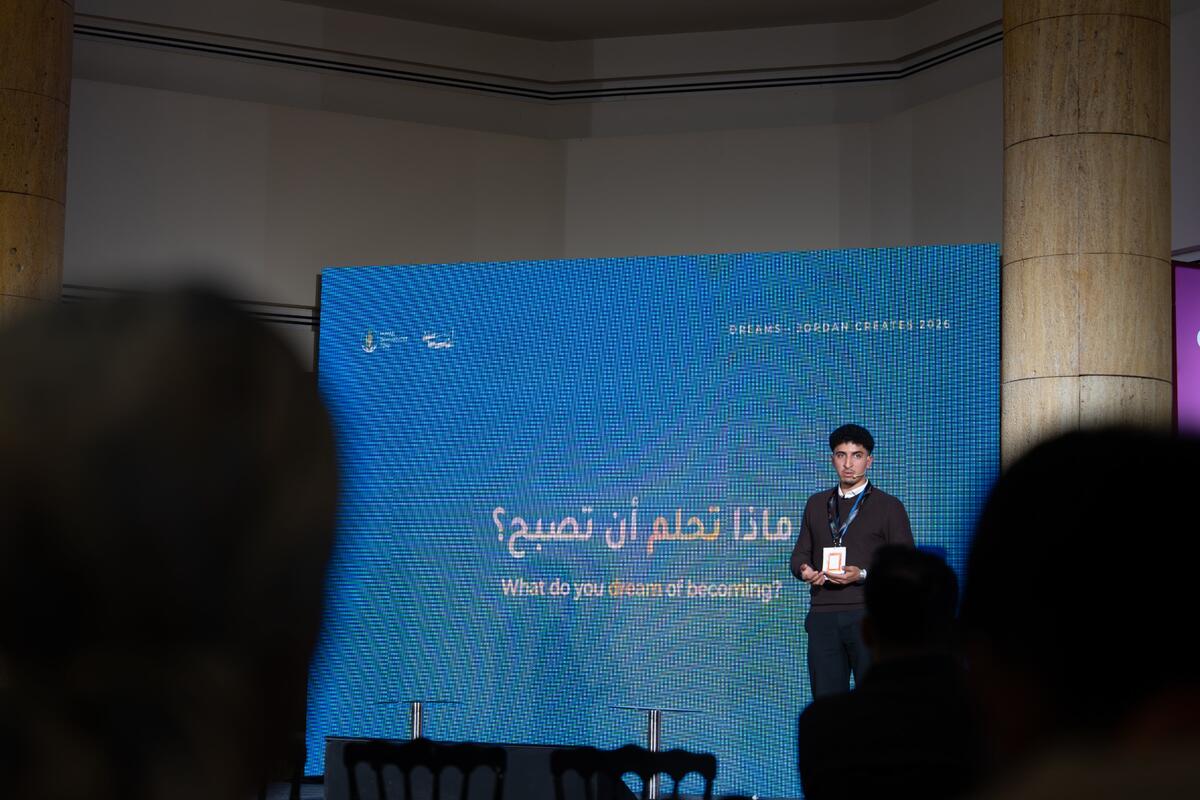
At Jordan Creates 2026, Human Development Fund (HDF) brought a question to the stage: what do you dream of becoming? It is the starting point for Dreams AI, a project that helps children from refugee camps and low-income communities picture themselves in the careers they hope to pursue.
At Panorama, Dead Sea, Abdullah Ibrahim, HDF’s Chief Development Officer, and Abdollah Farsane, Creative Director of Humans of HDF, presented the project and the approach to storytelling behind it. Their invitation to creators was to help connect new technology with humanitarian work, while keeping the people whose stories they tell at the center.
“We talk about what it means to be cutting edge when it comes to technology and AI, but no one ever really talks about what it means to be cutting edge when it comes to the humanitarian sector. HDF exists to bring both of those worlds together,” Abdullah said.
Dreams AI begins with a child’s own words
The project grew from a classroom visit in Mafraq, Jordan. HDF asked children what they wanted to become, and their answers became the basis for portraits showing their imagined futures.
The process has three steps: Speak, See and Become. First, a child tells an HDF caseworker about their ambition in their own words. Dreams AI then turns that answer into a portrait of their future career, created while the child watches it appear. That ambition becomes a direction that mentoring, schooling and sponsorship can help the child work toward.
The portrait gives the child something visible to hold onto. Making progress toward that future takes continued support, education and opportunities. Dreams AI starts that conversation by listening to what the child wants for themselves.
Telling children’s stories with dignity
Humans of HDF is the visual and editorial team that documents the people HDF serves, from classrooms to camps and villages. It shapes how Dreams AI is filmed, edited and shared, and supports the creators who take part.
At the event, the team explained why the person in the story should remain its focus. A child has ambitions, humor and a voice of their own. Those qualities deserve space in the way their life is presented.
The presentation also outlined the safeguards behind that approach: a guardian’s release before a child’s face or name is shared, clear labeling of AI-generated portraits, and review by HDF Jordan before stories featuring individual children are published. Creators are asked to avoid pity-driven framing and content that uses suffering to attract views.
These standards give participating creators a practical starting point for telling stories that respect the people involved.
Connecting creators with humanitarian work
“Jordan is a home for HDF now,” Abdullah said. The event gave HDF a setting to share its work in Jordan and invite creators to contribute their skills.
Creators around the world can help more people understand humanitarian needs, raise awareness of HDF’s programs and encourage support for the work. Through Dreams AI, they can also help audiences see children’s ambitions and the opportunities needed to pursue them.
“We want content creators and influencers to help tell these children’s stories in order to make their dreams a reality,” Abdullah said.
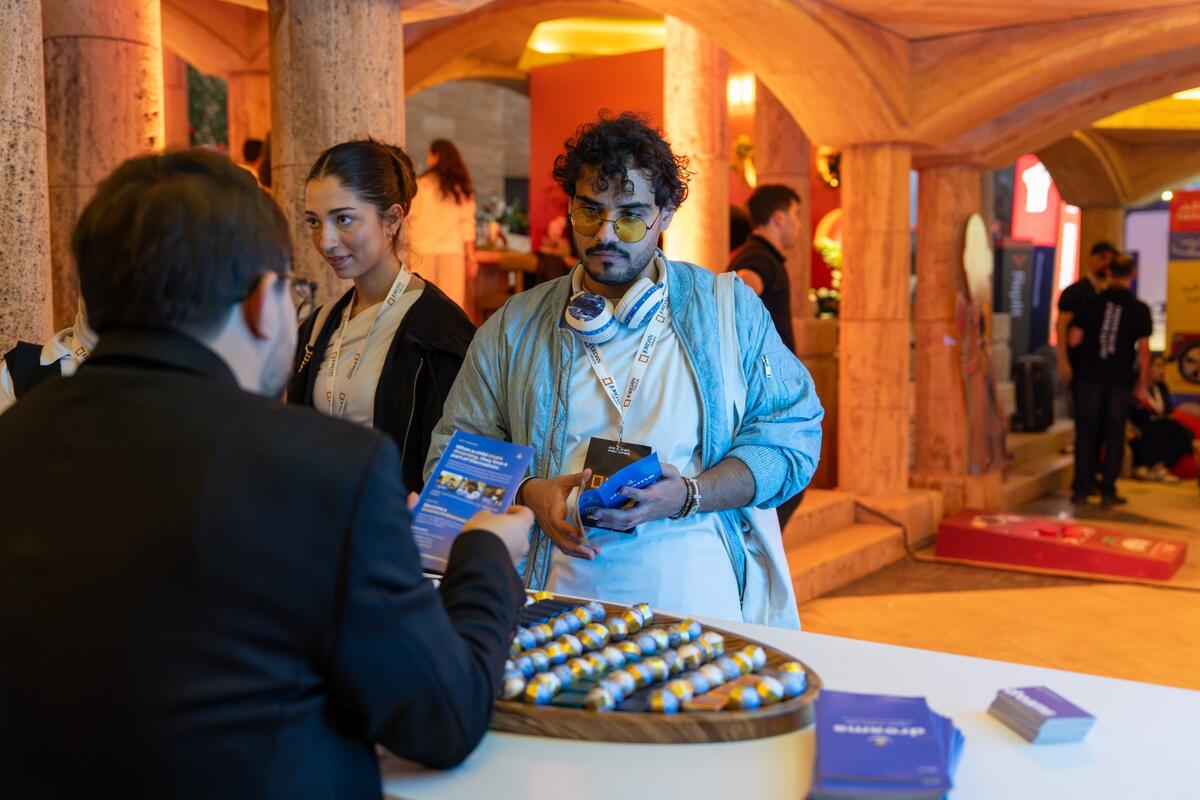
HDF is inviting creators to join its network and tell real stories from the field. If you would like to take part, share your channels and examples of your work through the creator form, and HDF’s team will be in touch.