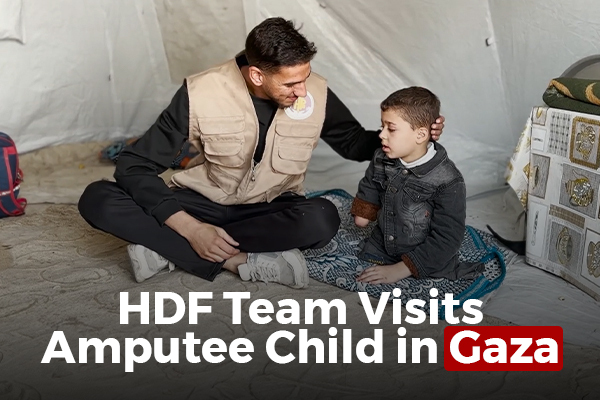

Mohammed Saeed’s story begins with a family living through displacement in Gaza. During the war, Mohammed lost both legs and his right hand. When a Human Development Fund (HDF) team visited in January 2025, his mother was caring for him in a tent without the wheelchair the family had been forced to leave behind.
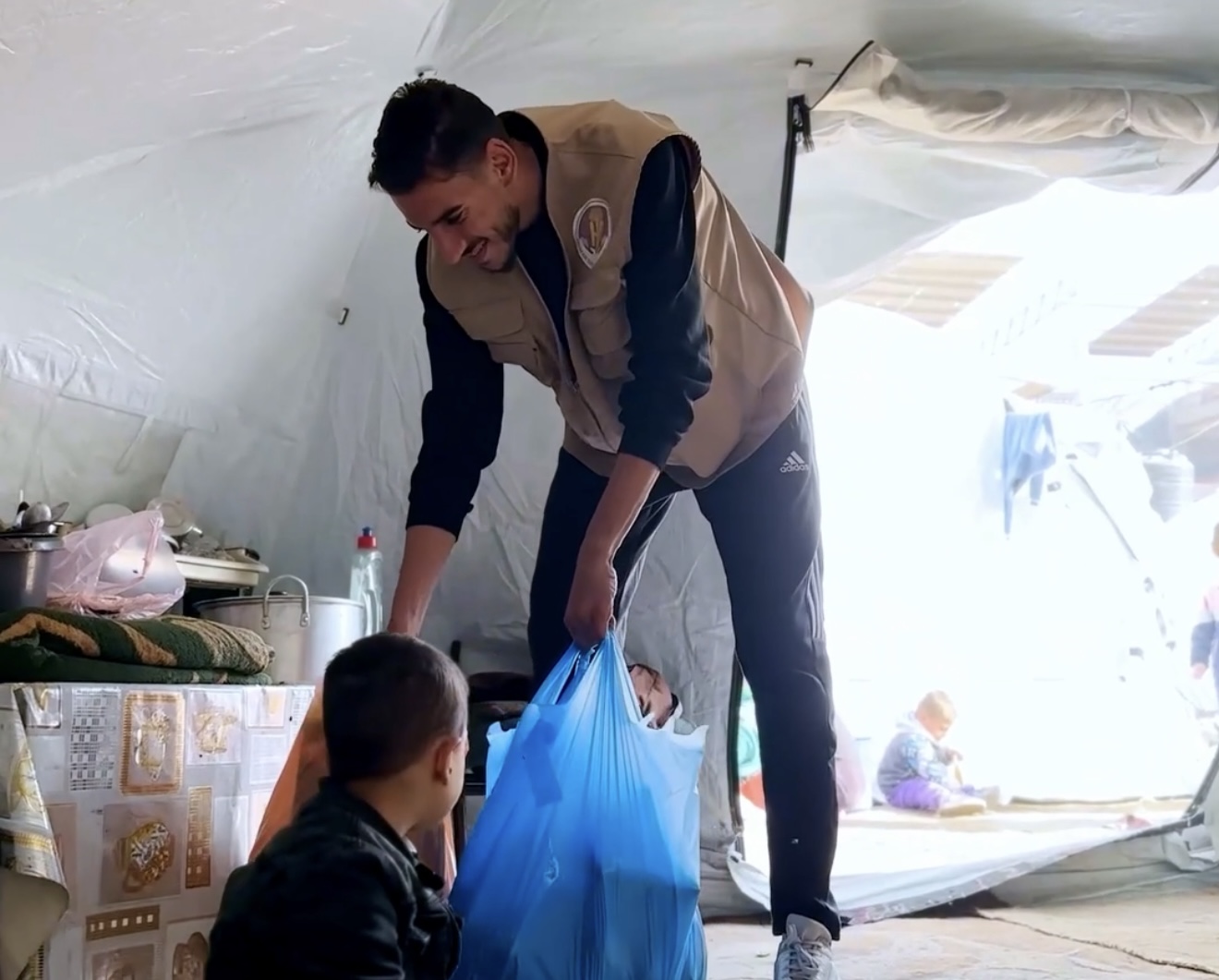
The team came with toys, clothing and food baskets. The visit brought practical help and a welcome moment of play. It also showed how much the family still needed, including suitable shelter, reliable mobility support and access to basic facilities.
Mohammed Saeed’s story begins with displacement
Mohammed’s mother described the family’s departure from their home and what losing his wheelchair meant for both of them:
“Our house was destroyed, and we were forced to leave everything behind, including Mohammed’s wheelchair. Now we live in a tent that is not fit for living, and even basic tasks like finding a bathroom are a struggle.”
Without the wheelchair, she carried Mohammed on her shoulders during the family’s escape. The same loss continued to shape daily life after they reached the tent.
She also spoke plainly about the treatment they encountered:
“The occupation showed us no mercy. They show no mercy for the disabled.”
Her words describe more than displacement. They show how conflict and inaccessible surroundings can place additional demands on children with disabilities and the family members caring for them.
A family visit shaped by immediate needs
During the visit, the HDF team delivered food baskets, clothing and toys. Each item answered a different need. The food and clothing supported the household, while the toys gave Mohammed space to play and engage with the people around him.
His mother thanked the team for the visit:
“We thank the HDF for supporting our son Mohammed and for the joy they brought to his heart today. May God bless them and reward them abundantly.”
Her gratitude did not erase the family’s circumstances. It marked a good moment within them.
Why accessibility belongs within emergency relief
Mohammed’s experience shows why accessibility cannot be separated from humanitarian support. Food, clothing and shelter matter. So do a usable wheelchair, a bathroom a child can reach and living conditions that do not place every movement on one caregiver.
These are not secondary comforts. They affect whether a child can move, rest, play and participate in family life with greater safety and independence.
One visit, and needs that remained
The January visit did not replace Mohammed’s wheelchair or provide the family with permanent housing. It brought supplies, companionship and attention to needs that are often overlooked.
Both parts of that account matter. Donor support created a meaningful day for Mohammed and provided immediate help to his household. At the same time, the family still faced barriers that required longer-term attention.
Watch Mohammed’s story
The video recorded during the visit carries his mother’s account and shows the time Mohammed and the HDF team spent together. HDF’s Gaza response page provides current information about the organization’s published work and available programs.
May Allah protect Mohammed and his family, grant them safety and ease, and bring relief to every child living through displacement and conflict. Ameen.