“One water tanker lasts for only one week,” Ahmed Al-Jumaa told Human Development Fund’s (HDF) team in Al-Eis, south of Aleppo. Since returning, he has rebuilt parts of his home while caring for 12 children. Buying water remains another regular expense.
“So how can I possibly afford to rebuild my home and provide water for my children?” he asked. The Al-Eis water project addresses that question by repairing the town’s water station, installing solar power and helping farmers recover their livelihoods.
Coming home to a town that needs water
Al-Eis already has a water station. It needs new pumps, a working chlorination system, repaired pipes and an affordable power supply. Until those systems work reliably, families such as Ahmed’s continue paying for trucked water.
“This area is suffering from severe water scarcity,” said Mohammad Al-Ali, head of Al-Eis Municipality. As people return after displacement, safe drinking water is one of the town’s immediate needs. Restoring livelihoods is another.
HDF and its local partner, Amal Organization for Relief & Development, are carrying out a seven-month project from June through December 2026. It is designed to serve 7,073 people in Al-Eis, including residents, returning families and people displaced from elsewhere.
Drought, floods and a lost harvest
Water shortages and flooding have both affected Syria’s farms. The UN Food and Agriculture Organization reported severe drought and a reduced wheat harvest in 2025. In March 2026, the UN humanitarian office reported flooding that damaged shelters across Aleppo and Idleb.
For Omar Al-Khalaf, who returned to Al-Eis in 2026, heavy rain did not bring the harvest he had hoped for. “We planted our crops, but we did not harvest them,” he said.
Omar described vegetation blocking channels along the Queiq River. When heavy rain comes, water spills onto the fields. “If the river channels are properly cleared every year, it would relieve us of a great burden.”
Agriculture is the town’s main source of income, according to Al-Ali. A lost harvest makes it harder to pay for household needs, including the next delivery of water. That connection is why the project includes both the water station and work on nearby farmland.
Solar power for the Al-Eis water project
In September, crews began installing a 160-panel solar system at the water station. The project also includes replacing pumps, restoring chlorination and repairing 200 meters of the pipe network.
Solar power is intended to reduce the station’s dependence on fuel and help keep pumping costs manageable. Chlorination and regular water-quality testing are part of the plan to provide safe drinking water.
The project aims to reduce reliance on trucked water by 80%. This is a target for the work underway; it is not yet a measured result.
Clearing channels and helping 110 farmers
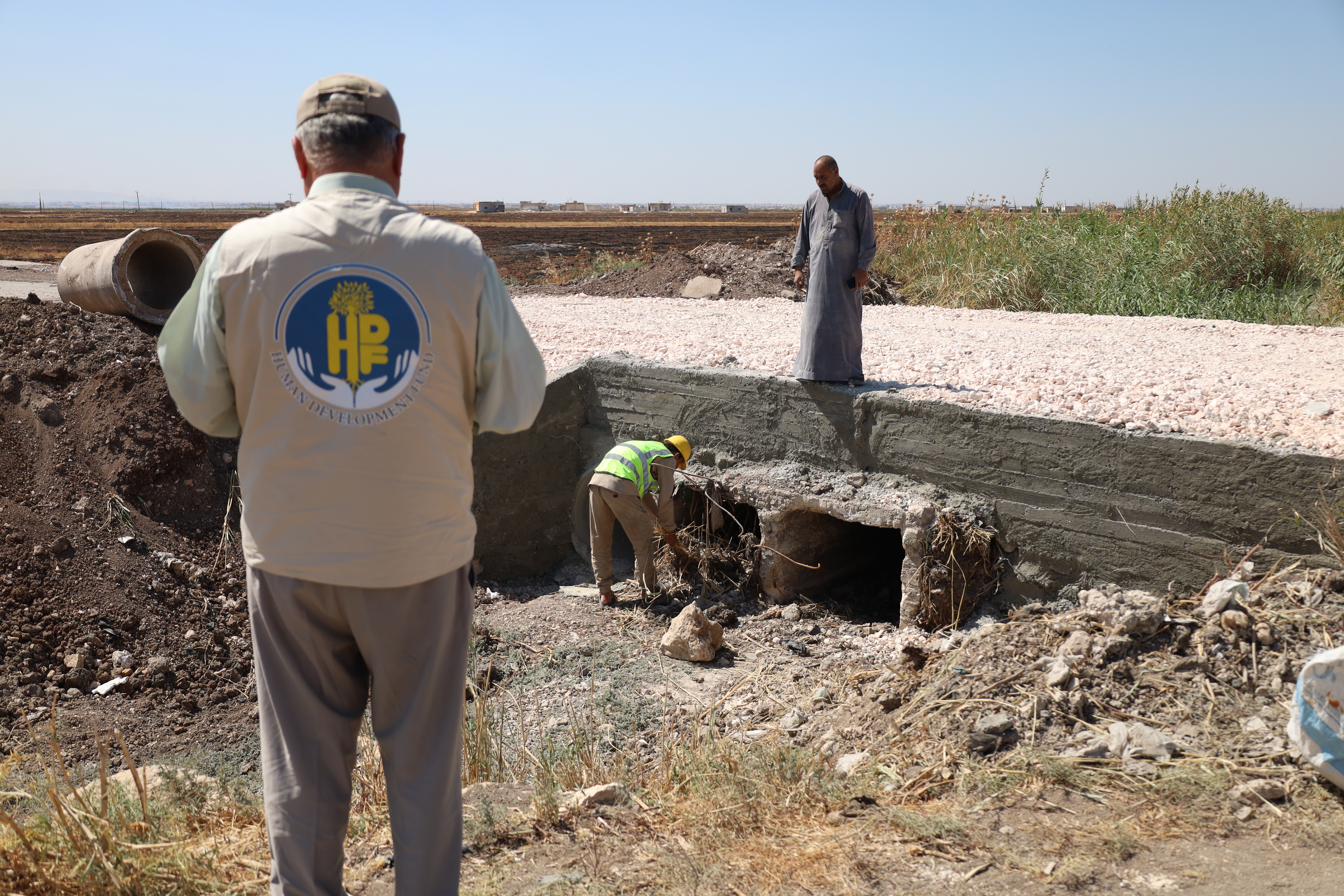
River work also began in September. The project includes clearing and desilting 3,300 meters along the Queiq River and building a small agricultural bridge. Its target is to reduce flooding on farmland by half.
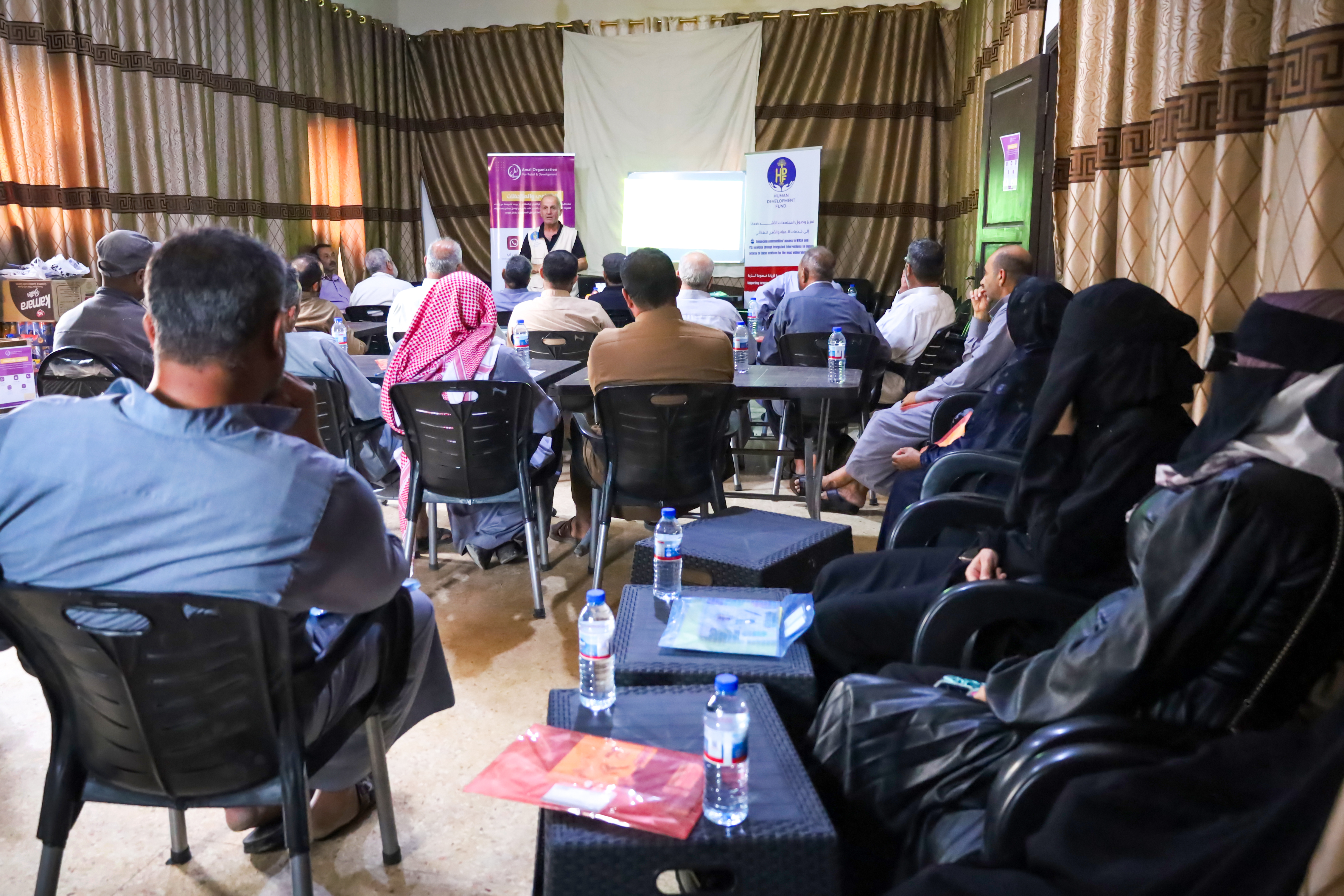
Alongside this work, HDF and Amal held a three-day Good Agricultural Practices training in Al-Eis from September 27 to 29. Participants received certificates after completing the training.
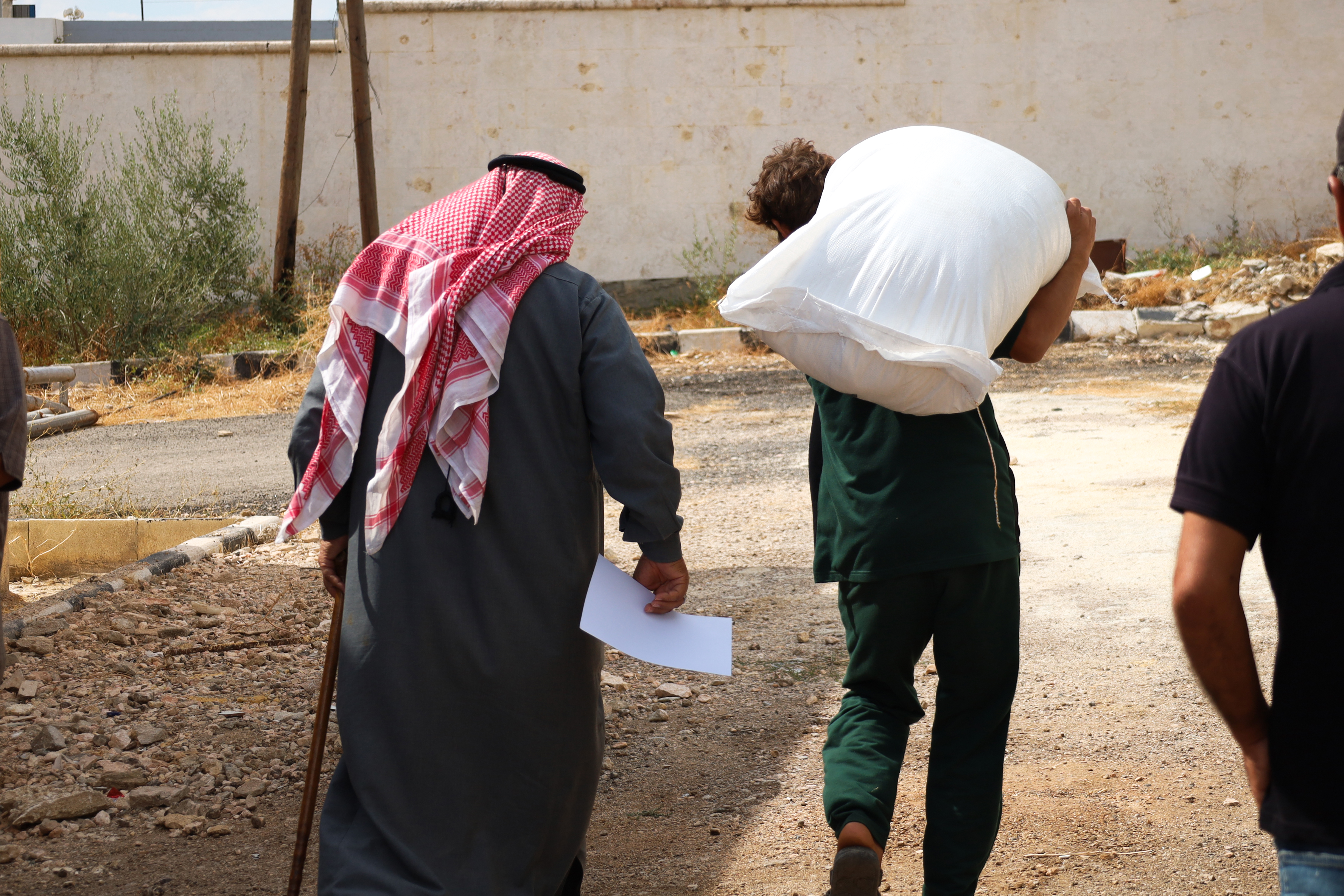
The partners also distributed 50 kilograms of urea fertilizer to each of 110 farmers. Priority went to small-scale farmers, households headed by women, people with disabilities and families whose fields had flooded.
The training and fertilizer address farmers’ immediate needs, while the river work aims to reduce the risk to future crops. Both are part of helping households earn a living again.
Keeping the water station running
The project includes training a four-person community Water Unit to operate and maintain the station. HDF plans to cover three months of operating costs, including chlorine, during the transition.
Handover of the station and river works to local authorities is planned for December 2026. Maintaining the pumps, testing water and keeping channels clear will remain important after construction ends.
For families returning to Al-Eis, rebuilding a home and securing an income happen alongside the daily need for water. The work underway addresses those needs together, with repairs to shared infrastructure and practical assistance for farmers.